
Vehicle transport, compared
Ship Your Car With Confidence
Tell us where the vehicle is going and roughly when. We use those details to work out which transport options suit the shipment, so you can compare them before you decide anything.
Where is the vehicle going?
Start with the route. Vehicle details, timing and contact information follow in the next steps.
We ask for shipment details first and contact details last. Before anything is submitted you will see exactly how your information is used and shared.
No obligation
Requesting options does not commit you to anything.
No account required
There is nothing to sign up for and no password to remember.
Contact details requested last
You give shipment details first and personal details at the end.
You choose the transport method
Open, enclosed, or not sure yet are all valid answers.
The process
How Car Shipping Works
Vehicle transport is arranged in three stages. You describe the shipment, you review the options that suit it, and the pickup and delivery are agreed with the transport provider.
Step 1
Tell us about your shipment
Give us the pickup and delivery locations, plus basic vehicle details. This takes a few fields and no account.
Step 2
Review your transport options
Your route and vehicle details are used to work out which transport options suit the shipment, so you can see how the choice affects cost and timing.
Step 3
Arrange pickup and delivery
Once you have chosen an option, pickup and delivery are scheduled directly with the transport provider. You agree the terms with them before anything is booked.
Transport methods
Choose the Right Way to Ship Your Vehicle
There are three common ways to move a vehicle. The right one depends on the vehicle's condition and value, your budget, and how much protection matters to you.
Open Auto Transport
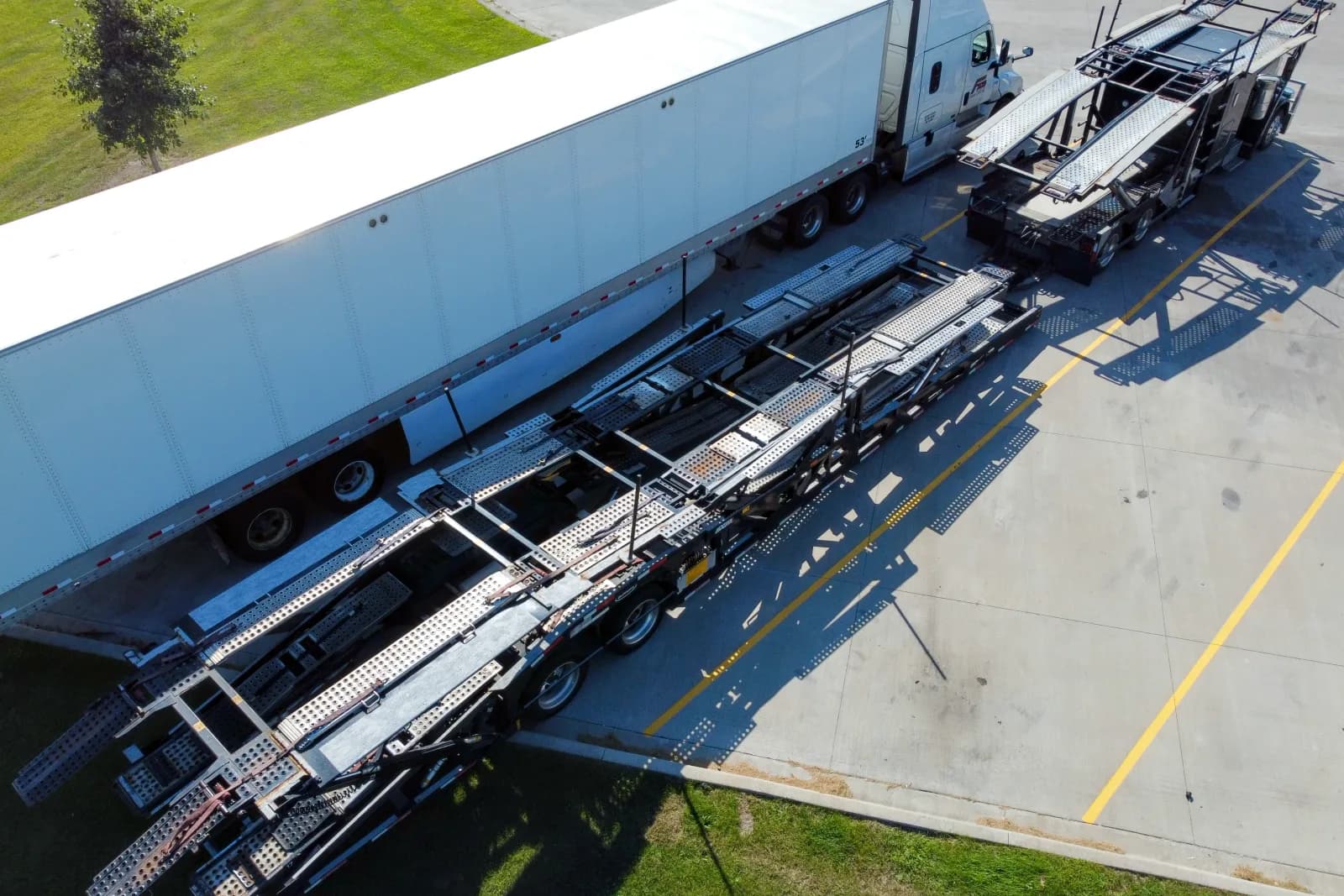
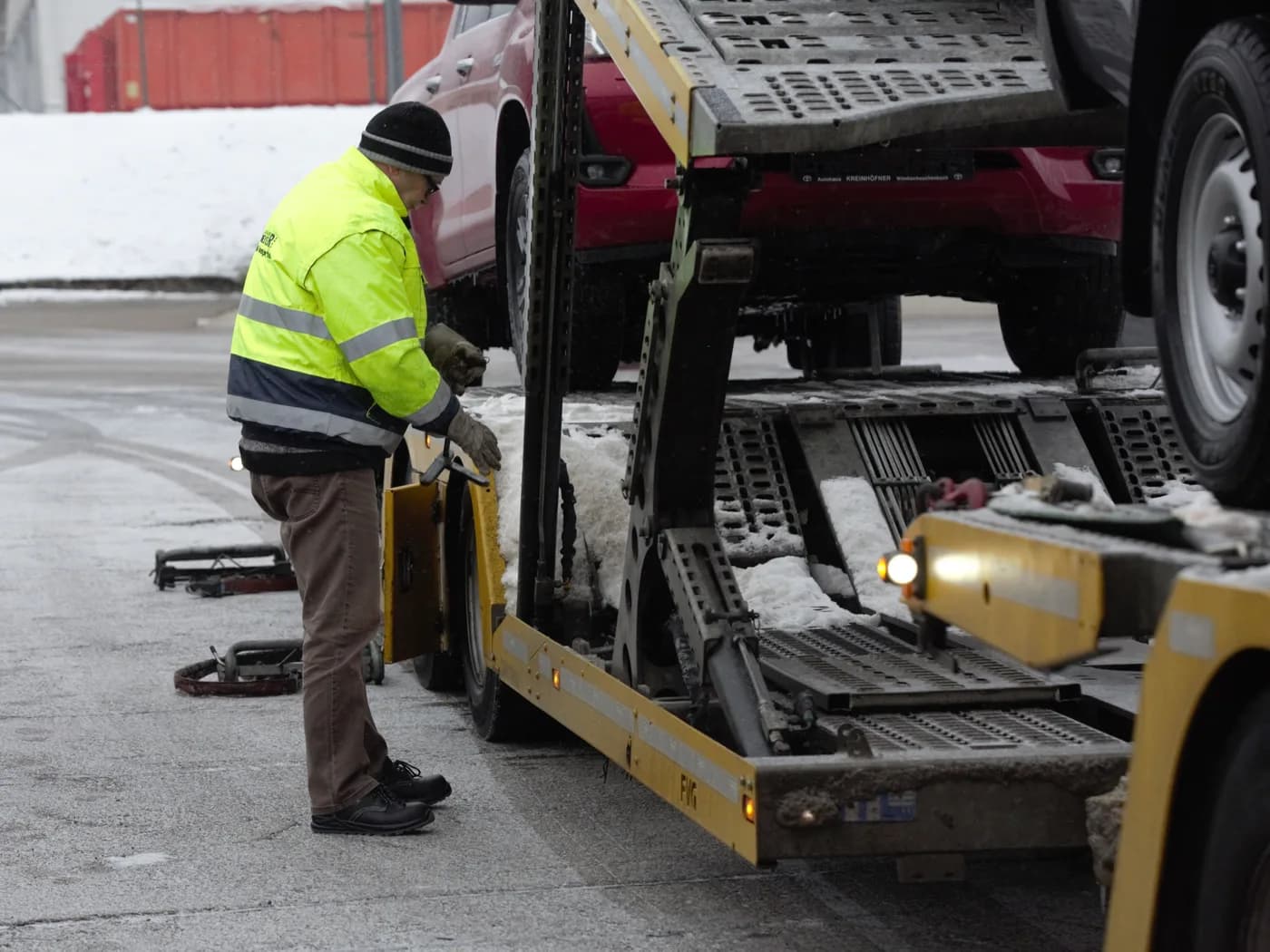
The vehicle travels on an open multi-level trailer alongside other vehicles. It is the standard method used across the industry.
- Usually the more economical transport method
- Widely available on most routes
- Suitable for vehicles in normal condition
Best for
Read how open car transport works
Everyday vehicles, including daily drivers, family cars and most SUVs.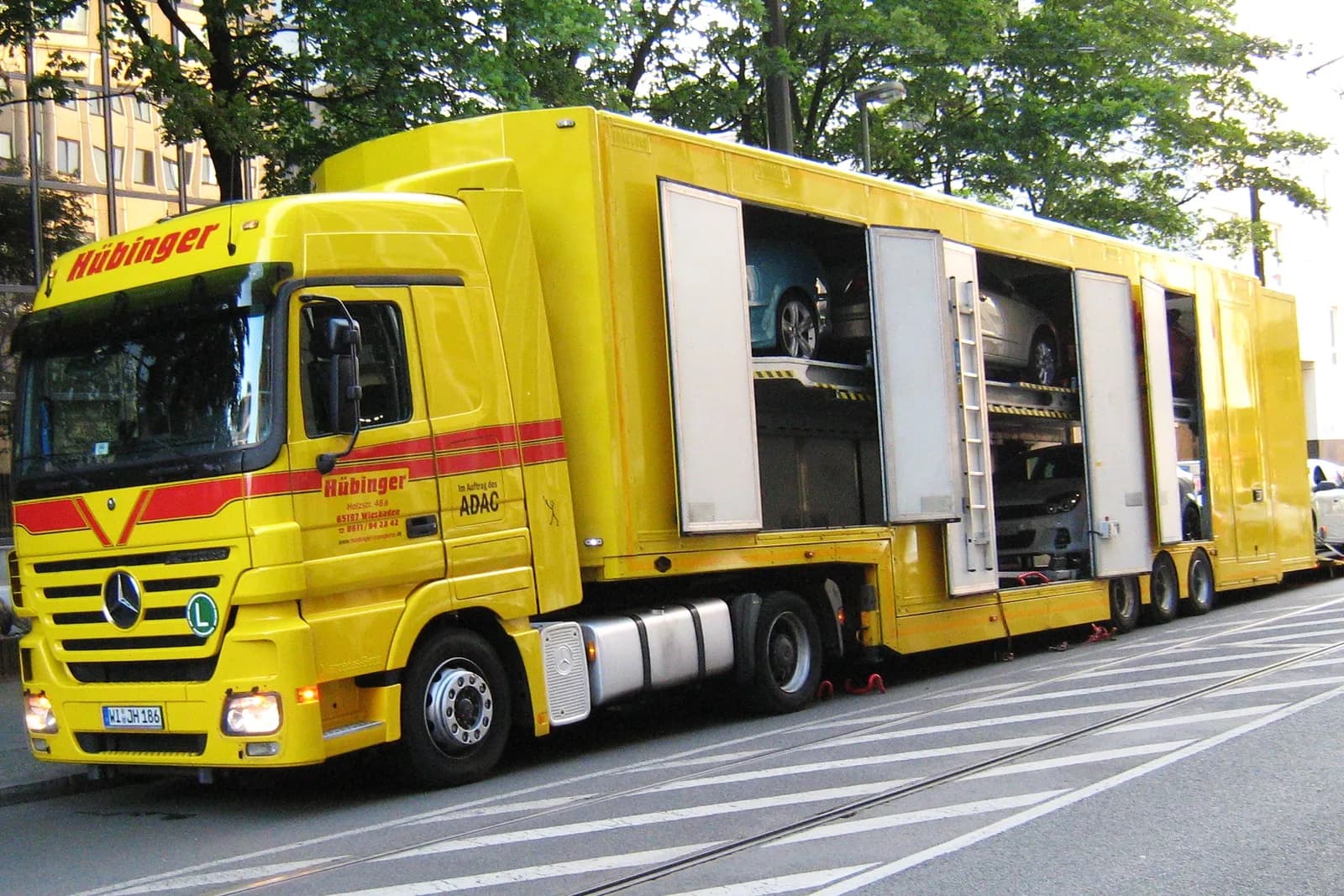
Enclosed Auto Transport
The vehicle travels inside a fully enclosed trailer, so it is not exposed to weather, road debris or the open road.
- Reduced exposure to weather and road debris
- Fewer vehicles share the trailer
- Often preferred for a vehicle that is hard to replace
Best for
Classic, luxury, modified and high-value vehicles.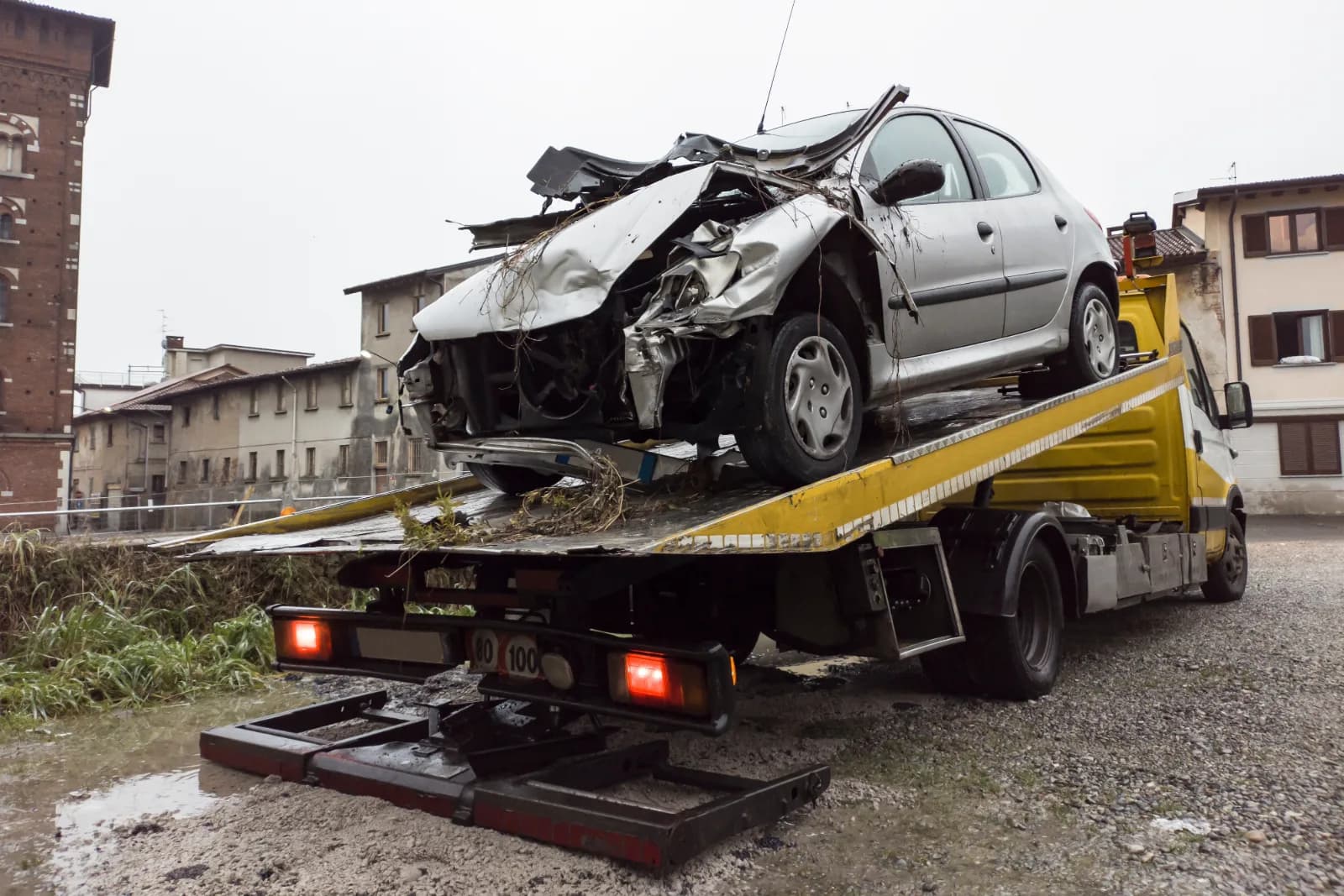
Inoperable Vehicle Transport
For a vehicle that cannot be driven onto or off a trailer, loading and unloading need different equipment and more time.
- Handles vehicles that cannot be driven
- Planned with extra time for loading
- Can still be shipped open or enclosed
Best for
Vehicles with a mechanical fault, a dead battery, or no current registration.
Open or enclosed?
The two methods differ on protection, relative cost and how widely each is available.
Factor
Open transport
Enclosed transport
Typical use
Open
The everyday choice for most vehicles
Enclosed
Chosen when the vehicle is valuable or hard to replace
Protection
Open
Exposed to weather and road debris
Enclosed
Fully enclosed trailer, so exposure is limited
Relative cost
Open
Usually the lower-cost method
Enclosed
Usually costs more
Availability
Open
Widely available on most routes
Enclosed
Fewer trailers, so availability is narrower
Ideal vehicle type
Open
Daily drivers, family cars, most SUVs
Enclosed
Classic, luxury, modified and high-value vehicles

What drives the price
How Much Does It Cost to Ship a Car?
There is no single price. What you pay depends on how far the vehicle travels, where it is collected and delivered, the size and condition of the vehicle, whether you choose open or enclosed transport, and how flexible your dates are. Rates are set per shipment, so the same route can be priced differently from one week to the next.
We do not publish average prices or price ranges for routes yet. A number is only shown once it can be traced to a documented source and a review date, because an unsourced average sets the wrong expectation before you have even asked for a quote.
What goes into your quote
The same parts build every rate, whether the vehicle is crossing one state or eight. These are the ones a carrier looks at.
Distance
Longer routes generally cost more because they consume more fuel, driver time and trailer space.
Pickup and delivery locations
A dense metro area is usually easier to serve than a remote address, and a location a large truck cannot reach may need a handover point.
Vehicle size and type
Larger and heavier vehicles take up more trailer space and can add to the cost. A compact car and a full-size truck are not priced the same.
Whether the vehicle runs
A vehicle that cannot be driven needs extra equipment and time to load and unload.
Open or enclosed transport
Enclosed transport costs more than open transport because it carries fewer vehicles and uses specialised equipment.
Season and timing
Demand changes through the year and by corridor. Peak moving season and limited carrier availability on a route both affect price.
How flexible your dates are
A wider pickup window usually makes it easier to place a vehicle on a trailer that is already heading your way.
What you can actually influence
Most of the price is decided by the route and the vehicle, which are fixed. These are the parts where what you enter, or how flexible you can be, changes the outcome.
Distance and route
How far the vehicle travels, and whether that route runs through busy corridors or quieter ones.
Nothing to change here, but it is worth knowing that a longer route is not priced by a flat rate per mile.
Route accessibility
Whether both ends can be reached by a large truck without a handover, and whether local restrictions apply.
Give an address you know a truck can reach. If it cannot, say so early so a handover point can be arranged.
Vehicle dimensions
Length, width, height and weight determine how much trailer space the vehicle needs.
Enter the exact year, make and model. Modified, lifted or oversized vehicles should be described accurately.
Vehicle condition
A vehicle that starts, steers and brakes is quicker to load than one that has to be winched on.
Say whether the vehicle runs rather than leaving it to be discovered at pickup. It changes the equipment needed.
Carrier type
Open and enclosed trailers carry different numbers of vehicles and are not equally available on every route.
If your dates are tight, open transport usually offers more scheduling choice than enclosed.
Season and timing
Availability shifts with the time of year and how much traffic a corridor is carrying.
Avoiding peak moving season can help, if your plans allow it.
Pickup flexibility
A flexible window lets a carrier fit your vehicle onto a trip it is already making.
Biggest leverThis is usually the single biggest lever. A wider window generally gives you more options than a fixed date.
Corridors
Popular Car Shipping Routes
These are the corridors we are building route guides for first, chosen because they are long-distance moves where the cost and timing questions matter most.
Each line joins the two cities named in a route record. Nothing here shows a carrier's actual road path, and a corridor being listed is not a coverage promise.
8 corridors
Distance, transit times and price ranges for each route are published only once every figure has been checked against a documented source, with the review date shown alongside it. Until then a route is listed without numbers rather than with a placeholder estimate. Guides are published one at a time as each corridor is reviewed, and a route becomes a link at that point.
Timing
How Long Does It Take to Ship a Car?
Transit time is not one number, and any figure given before your route is known is a guess. What can be explained honestly is what moves the number, and which parts of it you can affect.
Pickup scheduling and time in transit are two separate waits. A carrier may need several days to place your vehicle on a trailer that is heading the right way, and that is usually the part a flexible pickup window shortens.
Total mileage
The single largest factor. A cross-country shipment spends far longer on the road than a regional one.
The route itself
Direct interstate corridors move faster than routes that require detours or back-and-forth legs.
Pickup scheduling
Time before the vehicle is collected is separate from time in transit, and a flexible window shortens it.
Weather
Snow, ice and severe storms can delay a trailer, particularly across mountain passes and in winter.
Traffic and congestion
Metro congestion affects how quickly a carrier can get in and out of both ends of the trip.
Carrier routing
Carriers combine loads, so your vehicle may join a trailer that is already working its way across the country.
Who this is for
Who Uses Car Shipping Services?
Vehicle transport is used by a wider range of people than it first appears. Most shipments fall into one of these groups.
People relocating
Moving across the country with a vehicle you would rather not drive, especially when you are already driving a moving truck.
Seasonal residents
Moving a vehicle between a summer and a winter home, often on a repeat corridor in spring and autumn.
Online vehicle buyers and sellers
A vehicle bought or sold at a distance still has to physically change hands at both ends.
Students and families
Getting a car to a campus or a new city without a long drive or a second driver.
Military households
Relocations on a fixed timeline, where the vehicle needs to arrive without a cross-country drive.
Classic and luxury owners
Vehicles where the condition matters more than the price of transport, and enclosed transport is usually preferred.
Dealerships and businesses
Moving inventory, dealer trades or fleet vehicles between locations.
What this service does differently
The aim is a straightforward request and a clear explanation, not a sales funnel.
One structured request
You describe the shipment once, in a fixed order, instead of repeating the same details to different providers.
Shipping information in one place
Cost factors, transport methods, transit expectations and route guidance are on the site rather than scattered across forums.
Route and vehicle guidance
Enough detail to judge whether open or enclosed transport suits the vehicle, and what your dates mean for scheduling.
Personal details last
Shipment details come first. Name, email and phone are only requested once the rest of the request is complete.
Nothing to sign up for
No account, no dashboard and no password. The request is a single form.
What to check before you choose a provider
These apply to any provider you speak to, including whoever your request reaches.
Which transport method is being offered?
Open and enclosed are different services at different prices. Make sure you know which one you are being quoted for.
What pickup and delivery windows are offered?
Ask how wide the window is and what happens if the vehicle cannot be collected on the first attempt.
What do the provider's terms cover?
Read the cancellation terms, the payment terms and what the carrier's insurance covers before you agree to anything.
How is vehicle condition recorded?
A condition report at pickup and delivery is what protects you if there is a dispute later.
Before you submit
What Happens After You Request a Quote?
Requesting a quote means handing over contact details, so it is reasonable to want to know what happens next. This is the whole process, in order.
Step 1
You give the shipment details
Pickup and delivery locations, the vehicle, whether it runs, and your transport preference and timing. No account, no payment details.
Step 2
You give contact details last
Name, email and phone are requested only once the shipment details are complete, so the request can be answered rather than abandoned halfway.
Step 3
You see the disclosure before you submit
The exact wording covering how your information is used and shared, and who may contact you, is shown before you confirm. Nothing is submitted without it.
Step 4
You can read what happens to your data
The privacy policy sets out what is collected, why it is collected and how long it is kept, and is being finalised alongside the disclosure wording.
How requests are shared with transport partners is still being finalised, so no wording here promises a specific sharing arrangement. Read the privacy policy for the current position.
Questions
Car Shipping FAQs
The questions people ask most often before requesting a quote.
How much does it cost to ship a car?
There is no single price. Cost depends mainly on how far the vehicle travels, where it is picked up and delivered, the size and type of vehicle, whether it runs, whether you choose open or enclosed transport, and how flexible your dates are. Rates are set per shipment and move with carrier availability, so the same route can be priced differently from one week to the next.
How long does car shipping take?
Transit time depends mostly on distance and how a carrier routes its loads. A regional move is usually quicker than a cross-country shipment. Pickup scheduling, weather, traffic and the number of stops along the way all affect the total. Flexible pickup dates generally give you more scheduling options than a fixed date.
Is open or enclosed transport better?
Neither is better in every case. Open transport is the standard method and is usually the more economical choice. Enclosed transport carries the vehicle inside a fully enclosed trailer, which reduces exposure to weather and road debris, and is usually more expensive and less widely available. Enclosed transport is often chosen for classic, luxury or high-value vehicles.
Can I ship a vehicle that does not run?
Usually, yes, but it needs special handling. A vehicle that cannot be driven onto and off a trailer may require a winch or a forklift, and carriers often allow more time for it. Tell us the vehicle does not run so it can be planned for correctly.
What information is needed for a quote?
Pickup and delivery locations, the vehicle's year, make and model, whether it runs, and your preferred transport method and timing. You can say you are not sure about the transport method. Contact details are requested last, after the shipment details.
How far in advance should I arrange transport?
Earlier is generally easier to schedule, particularly on long routes or for enclosed transport. A fixed date is possible but usually gives fewer options than a flexible window. If your date cannot move, start the process as early as you reasonably can.
Can personal belongings be left in the vehicle?
Most carriers do not allow personal items in a vehicle they transport, and items left inside are generally not covered if something goes wrong. Plan to ship the vehicle empty, and confirm the carrier's own policy before pickup.
How do pickup and delivery work?
A carrier needs somewhere a large truck can safely stop, which is often a nearby parking lot or a wide street rather than a residential driveway. The carrier arranges a pickup window with you directly. Inspect the vehicle and record its condition at both pickup and delivery.
Ready to Get a Car Shipping Quote?
Tell us where the vehicle is going and roughly when. It takes a few fields to start, there is no account, and requesting options does not commit you to anything.